Change Management for Schools
Why Change Management is so important for Implementing your Strategic Plan
Strategy is NOT Implementation
Let me begin with a distinction. Strategy is the direction. Implementation is the disciplined work of making that direction become a reality.
Most strategic plans in schools do not fail because the goals are wrong. They stall because we treat strategy like paperwork and underestimate the human reality of change.
Change Management is often the key implementation component that is missing in implementation planning and execution. Change Management must focus on the human side, the people element, as it is the people who need to do the implementation, the people who are impacted, the people practice that needs to change if there is going to be sustainable change!
Schools do not change, People do!
Schools are not machines. They are communities of people with histories, relationships, values, pressures, hopes, habits and professional identities. Hence why I have headed this Schools do not change People do!
A change to assessment is not merely a new template. It may require teachers to discuss evidence more openly, develop greater consistency and reconsider how they respond to learner progress. A change to attendance is not merely a new target. It changes how the school notices patterns, engages whānau, coordinates pastoral support and follows up concerns.
Distributed leadership is not simply giving people titles. It changes decision-making, role clarity, coaching expectations, accountability rhythms and how authority is shared.
That is why leaders must ask: what will people need to understand, believe, learn, practise, stop doing, start doing and sustain for this strategy to become real?
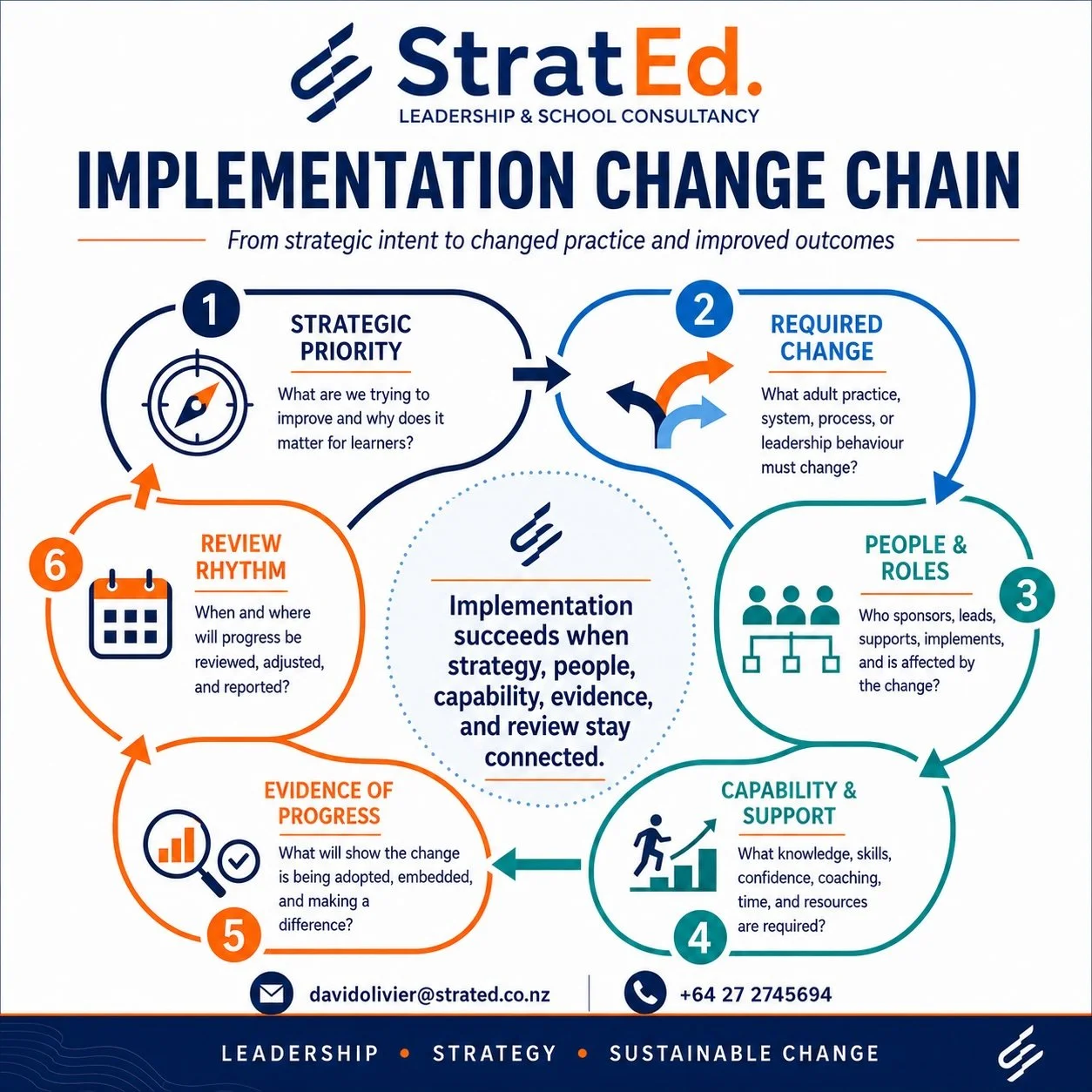
The StratEd Implementation Change Chain
Below is the StratEd Implementation Change Chain. Behind this sits a change management implementation framework that can help schools get their Strategic Plan implementation on track and keep it there until your evaluation shows that the implementation is having a positive impact on your students.
The Boards Role
The board has a different role in leading implementation. It does not manage the daily work of change, that belongs to the Principal and the Leadership team, The Board’s role is that of seeking disciplined assurance.
Activity is not the same as implementation. And implementation is not the same as impact. So board’s need to assure themselves that the right impacts are occurring in a timely fashion that benefit all the students in the school.
Here are a few useful board questions to be asked and answered at board meetings :
What specific change are we seeking? What are our priorities for this year.
What specific practice, system or leadership behaviour is changing?
What progress has been made? Constant and persistent questions to be asked and answered at each board meeting.
What evidence supports that judgement? Clear practical evidence of progress is essential at each board meeting.
What is off track, delayed or at risk? Seek the data to inform your questions.
What is the leadership response? What plans are in progress to get it back on track.
And what decision or support is required from the board? What better resources may we need to deploy to help.
Those questions keep the board at the right altitude—away from micromanagement, but also away from passive governance.